Showing posts with label type: Kindles with Audible. Show all posts

Wednesday, February 20, 2019

Overview: Divakaruni. Palace of Illusions.


Title: The Palace of Illusions: A Novel
Author: Chitra Banerjee Divakaruni (follow her at Twitter!)
Year: 2008

Comments: This is a brilliant retelling of the whole Mahabharata story by Draupadi herself, the wife of the five Pandava brothers — and, as this book asks, what if Draupadi loved Karna too...? From this beautiful book you will get new perspectives on Draupadi, Karna, and also on Krishna, with whom Draupadi, also known as Krishnā, has an abiding friendship. Bhishma and Shikhandin are also very powerful characters in this version of the story.

Bizzell Stacks: In addition, there is a copy available at Bizzell: PS 3554 .I86 P35 2009. 

ABE used books. There are used copies at ABE Books for $8 including shipping (checked price September 2020).

Kindle: You can buy your own Kindle copy from Amazon for $12.99 (checked price September 2020); more about Kindles.

Audible: You can buy an audiobook version of this book from Audible for $14.95 (checked price September 2020).

Length: four weeks. I've divided the reading into eight parts: Part A - Part B (one week of reading), Part C - Part D (another week of reading), Part E - Part F (a third week), and Part G - Part H (final week of reading).

(first week)
Reading A
1 Fire
2 Blue
3 Milk
4 Cosmology
5 Smoke
Reading B
6 Incarnations
7 Fish
8 Sorceress
9 Portrait
10 Births
11 Scorpion
12 Song

(second week)
Reading C
13 Scar
14 Brinjal
15 Lac
16 Boon
17 Grandfather
18 River
Reading D
19 Palace
20 Wives
21 Afterlife
22 Discus
23 Lake

(third week)
Reading E
24 Games
25 Sari
26 Rice
27 Tales
28 Lotus
29 Visitations
Reading F
30 Disguise
31 Preparation
32 Field
33 Sight

(fourth week)
Reading G
34 Secrets
35 Avanlanche
36 Wheel
37 Owl
38 Pyre
Reading H
39 Ash
40 Snake
41 Reed
42 Snow
43 Fire


Tuesday, January 29, 2019

Overview: Pattanaik. Seven Secrets of Shiva.


Title: Seven Secrets of Shiva
Author: Devdutt Pattanaik
Year: 2011

Comments: This is a fascinating study of Shiva arranged in the form of seven "secrets" along with abundant artwork. You can listen to an audio book in Bizzell for free, and to enjoy the artwork also, I would recommend purchasing the Kindle book, which is just $3.

Kindle: You can buy your own Kindle copy from Amazon for $2.99 (checked price January 2019); more about Kindles.

Audiobook: You can buy your own Audible copy from Amazon for $12.71 (checked price January 2019).

Length: two weeks. I've divided the reading into four parts: Part A - Part B (one week of reading), and then Part C - Part D (another week of reading).


Part A
1. Lingheswara's Secret
2. Bhairava's Secret (start)

Part B
2. Bhairava's Secret (finish)
3. Shankara's Secret

Part C
4. Bholenath's Secret
5. Ganesha's Secret

Part D
6. Murugan's Secret
7. Nataraja's Secret


Sunday, November 5, 2017

Overview: Pattanaik. Gita


Title: My Gita
Author: Devdutt Pattanaik
Year: 2015

Comments: Unlike other Gita commentaries, this book is organized thematically, and is full of stories to help contextualize the meaning of the Gita in a larger cultural and historical context. Plus, as always, there are illustrations by the author!

Kindle: You can buy your own Kindle copy from Amazon for $8.95 (checked price November 2017); more about Kindles.

Audiobook: You can buy your own Audible copy from Amazon for $7.49 (checked price November 2017).

Length: three weeks. I've divided the reading into six parts: A-B (first week), C-D (second week), and E-F (third week).

Part A
Why My Gita
Before My Gita: A Brief History of The Gita
My Gita
1. You and I do not have to judge

Part B
2. You and I have been here before
3. You and I experience life differently
4. You and I seek meaning

Part C
5. You and I have to face consequences
6. You and I can empathize
7. You and I can exchange
8. You and I withdraw in fear
9. You and I hesitate to trust

Part D
10. You and I have potential
11. You and I can include
12. You and I can accommodate

Part E
13. You and I have no control
14. You and I value property
15. You and I compare

Part F
16. You and I cling
17. You and I can be generous
18. You and I matter to each other
After My Gita: Yet Another Discourse by Krishna


Saturday, August 20, 2016

Overview: Parthasarathy. Krishna Krishna.


Title: Krishna Krishna
Author: Indira Parthasarathy
Year: 2014

Comment. This is a beautiful retelling of the Krishna legends, and there is also an audiobook version available that you can listen to in Bizzell.

Bizzell Reserves: Go to the Bizzell Reserve Desk to check out a Kindle with this book; you can learn about the Bizzell Kindles here. The Kindle also has an audiobook version you can listen to!

Bizzell Stacks. In addition, there is a copy available for checkout from the regular Bizzell stacks: PL 4758.9 .P297 K5713 2007 (click to see if it is checked out or not).

Kindle: You can buy your own Kindle copy from Amazon for $2.99 (checked price January 2019); more about Kindles.

Audible: You can buy an audiobook version of this book from Audible for $2.99 (checked price January 2019).

Length: two weeks. I've divided the reading into four parts: Part A - Part B (one week of reading), and then Part C - Part D (another week of reading).

first week
Reading Part A
Introduction
Prologue
Narada's Discourse
The Yadava Clan
The Magic Melody of the Flute
Kamsa's Invitation
Kamsa's Dream
Reading Part B
Jarasandha Provoked
The Retreat of Jarasandha
Destination Dwaraka
Rukmini's Wedding
The End of Jarasandha
Draupadi's Swayamvara

second week
Reading Part C
Politics and Marriage
The Final Duel
Gandhari's Curse
Bhama, The Brave
Krishna, The Psychologist
Reading Part D
Krishna Acquires Another Sister
Sukra's Curse
The Children of Destiny
Midnight Massacre
Sermon from the Chariot
The Lost Melody


Overview: Jackson. Brahma Dreaming.


Title: Brahma Dreaming: Legends from Hindu Mythology.
Author: John Jackson
Year: 2013

Comment: This is a delightful collection of stories, with an audiobook available also in Bizzell.

Bizzell Reserves: Go to the Bizzell Reserve Desk to check out a Kindle with this book; you can learn about the Bizzell Kindles here. The Kindle also has an audiobook version you can listen to!

Bizzell Stacks. In addition, there is a copy available for checkout from the regular Bizzell stacks: BL 1216 .J33 2013 (click to see if it is checked out or not).

Kindle: You can buy your own Kindle copy from Amazon for $5.99 (checked price November 2017); more about Kindles.

Audible: You can buy an audiobook version of this book from Audible for $7.49 (checked price November 2017).

Length: two weeks. I've divided the reading into four parts: Part A - Part B (one week of reading), and then Part C - Part D (another week of reading).

WEEK 1:
Reading A
Tales of Creation:
The Beginning
The Curse
The Milk Ocean
The Lie
The Sons of King Sagara
The Fish
Reading B
Tales of Destruction:
Sati
Burning Love
Taraka
Uma
Kartikeya
How Uma Became Parvati

WEEK 2:
Reading C
Ganesha
Yama and the Love Girl
Hanuman
Chandra's Shame
Tales of Preservation:
The Blue Boy
Reading D 
The Loves of Queen Pritha
Rama and Sita
The City of Dwaraka
The Iron Rod
Little Gopala
The End


Overview: Pattanaik. Jaya.


Title: Jaya: An Illustrated Retelling of the Mahabharata
Author: Devdutt Pattanaik
Year: 2010

Comment: Of the many different retellings of the Mahabharata that we have available for this class, this one is my favorite.

Bizzell Reserves: Go to the Bizzell Reserve Desk to check out a Kindle with this book; you can learn about the Bizzell Kindles here. The Kindle also has an audiobook version you can listen to!

Bizzell Stacks: There is also a copy available for checkout from the regular Bizzell stacks: BL 1138.25 .P38 2010 (click to see if it is checked out or not).

Kindle: You can buy your own Kindle copy from Amazon for $14 (checked price November 2017); more about Kindles.

Audiobook: You can buy your own Audible copy from Amazon for $4.95 (checked price November 2017).

Length: four weeks. I've divided the reading into eight parts: Part A - Part B (one week of reading), Part C - Part D (another week of reading), Part E - Part F (a third week), and Part G - Part H (final week of reading).

WEEK 1:
Reading A
What Ganesha Wrote
Structure of Vyasa's Epic
The Start of the Snake Sacrifice
Ancestors: Chandra's Sons
A Wife of Budh
Pururava's Obsession
Shakuntala's Innocence
Bharata's Heir
Yayati's Demand
Madhavi's Forgiveness
Parents: Mahabhisha Becomes Shantanu
Bhishma's Sacrifice
Daughter of a Fish
The Three Princesses
Birth of Vichitravirya's Childrens
Reading B
Birth: Satyavati's granddaughters-in-law
Birth of Kunti's Children
Birth of Gandhari's Children
Birth of Madri's Children
Death of Pandu
Education: Kripa and Kripi
Drona, The Teacher
Arjuna, The Greatest Archer
Ekalavya
The Graduation Ceremony
Karna's Story
Castaway: Bhima and the Nagas
A House of Lac
Killing Baka
Hidimba and Hidimbi
A Gandharva Called Angaraparna

WEEK 2:
Reading C
Marriage: Children from Shiva
Draupadi's Swayamvara
The Common Wife
Friendship: Krishna Enters
The Cowherd of Gokul
Return to Mathura
Migration to Dwaraka
Division: Kuru Lands
Burning of Khandavaprastha
Sharing Draupadi
Ulupi and Chitrangada
Eloping with Subhadra
Beheading Gaya
Nara and Narayana
Coronation: Death of Jarasandha
Duryodhana Falls into a Pond
The Death of Shishupala
Reading D
Gambling: Shakuni's Plan
Gambling Match
Disrobing of Draupadi
The Last Game
Exile: Krishna Visits the Pandavas
Draupadi's Vessel
The Kauravas Gloat
Jayadratha
The Story of Ram
Shiva Humbles Arjuna
Arjuna in Amravati
A Journey Full of Tales

WEEK 3:
Reading E
Tryst with the Rakshasas
Return of Arjuna
Daughters of Balarama and Duryodhana
Hanuman Humbles Bhima
Draupadi Admits a Secret
Savitri and Satyavan
Trapped by Nahusha
The Yaksha's Questions
Hiding: Nala and Damayanti
Servants in Virata's Court
Kichaka
Uttara's Bravery
Marriage of Uttari
Reading F
Gathering: Negotiations
A Fierce Mother and a Loyal Friend
Changing Sides
One or the Other Side
On Neither Side
The Gathering of Forces
Perspective: Song of God
War: Bloodbath
Sacrifice for Victory
A Woman on the Battlefield
Drona's Onslaught
Death of Abhimanyu

WEEK 4:
Reading G
Before Sunset
After Sunset
A Teacher Beheaded
A Fight Between Brothers
Wheel of Karna's Chariot
Death of Shalya
Fall of Ninety-Nine Kauravas
Below the Belt
Talking Head
Aftermath: Death of Draupadi's Children
Aswatthaman Cursed
Kunti's Secret
Rage of Elders
Gandhari's Curse
Reading H
Reconstruction: Yudhishthira's Coronation
Bed of Arrows
Death and Rebirth
Horse Sacrifice
Babruvahana
Start of Kali Yuga
Renunciation: Elders Renounce the Kingdom
End of the Yadus
Death of Krishna
Fall of Dwaraka
Renunciation of the Pandavas
Kauravas in Swarga
Epilogue: Snake Sacrifice
The Ideal Called Dharma

Friday, August 19, 2016

Overview: Pattanaik. Business Sutra.


Title: Business Sutra
Author: Devdutt Pattanaik
Year: 2013

Comments: This is an unusual book — unlike the other reading options for this class, it is not a collection of stories exactly, but it does contain many (many!) stories. I am sure this is an option that the Business majors in class would enjoy, along with students looking for a contemporary perspective on the meaning of the epics for India today. Now that you are familiar with both the Ramayana and the Mahabharata, you will appreciate all the mythological examples that Devdutt Pattanaik uses in the book, and in turn the book will give you new insight into the stories!

Length: six weeks. This is a big book, appx. 450 pages long, which means you can use it for reading for all six weeks from Week 9-14, although you can also choose to just read it for one, two, or three weeks, etc. Please make sure you start at the beginning so that you will be familiar with Pattanaik's terminology, and I've also written some Reading Guides to get you going! See the links to the Reading Guides below.

Kindle. The book is available for purchase at Amazon as a Kindle book for $15.99 (price checked November 2017); more about Kindles.

Audible. There is also an audiobook version from Audible.com for $5.60, and I've indicated the Audible chapter numbers below (the Audible chapter numbering starts with Chapter 3, so the book's Chapter 1 is Audible Chapter 3... weird, but that's how Audible numbers things).

The book itself is a delight to read, and it is also full of Pattanaik's thought-provoking illustrations, like these:


Week 1 Reading A: Reading Guide
Audible Chapter 3: Introduction  
Connecting Belief to Business
Belief, Myth, and Mythology
Decoding Culture
Connecting Mythology and Management
Becoming Chief Belief Officer
Design of the Book

Week 1 Reading B: Reading Guide
Audible Chapter 4: From Goal to Gaze 
Western Beliefs
Chinese Beliefs
Indian Beliefs
Caution!

Week 2 Reading C: Reading Guide
Audible Chapter 5: Business Sutra
Kama's Vision Statement:
Human hunger is unique
Imagination expands human hunger
Only humans can exchange
Every devata seeks a high return on investment
Conflict is inherent in exchange
Imagination can help humans outgrow hunger
Human hunger for the intangible is often overlooked
There are three types of food that can be exchanged during a yagna
We have to make room for the Other
Yagna can be a tool for personal growth, if we allow it to be

Week 2 Reading D: Reading Guide
Audible Chapter 6: Decisions
Drishti, observing objective reality
He who takes a call is a karta
Every one is a potential karta
A karta who allows and enables others to take a call is a yajaman
A yajaman has the power to take and give life
The size of the contribution does not matter
All calls are subjective
All decisions are contextual
Not everyone can handle the burden of uncertainty
Every decision has a consequence
Decisions are good or bad only in hindsight
Decisions are often rationalized in hindsight
If the decision is bad, the yajaman alone is responsible
If the decision is good, the yajaman is the beneficiary

Week 3 Reading E: Reading Guide
Audible Chapter 7: Violence
Business is violent
Violence is not always apparent
Mental violence is also violence
Violence creates winners and losers
Violence is culturally unacceptable if taking is not accompanied by giving
Violence becomes culturally acceptable when we take because no one gives
Exploitation is violence
Hoarding is violence
Hunger is insatiable
Regeneration ensures sustainable wealth
Restraint ensures regeneration
Restraint is violent

[Section 3E is short, while 3F is long, so I would urge you to move right on to that next part of the reading now to get a head start on that.]

Week 3 Reading F: Reading Guide
Audible Chapter 8: Seduction  
Business is seduction
He who satisfies hunger becomes desirable
Many devatas need to be seduced
Every devata has a devata of his own
Every devata's hunger is unique
Every devata matters depending on the context
Not all devatas are equal
Seducing multiple devatas is very demanding
Seduction needs to satisfy both parties
Sometimes, the yajaman also needs to be seduced
Audible Chapter 9: Churning   
The organization is ultimately a set of people
Every organization is a churn
If strategy is the force, then tactic is the counter-force
If creativity is the force, then process is the counter-force
If ambition is the force, then contentment is the counterforce
If hindsight is the force, then foresight is the counterforce
Upstream forces need to be balanced by downstream forces
Balance is the key to avoid a tug of war
The impact of an organizational decision varies depending on the source
In a shifting world, organizations need to be organisms
In an organism, individual potential and context are taken into consideration
Organisms thrive when the yajaman is flexible

[I am not sure if people are going to want to read this for as many as four, five, or six weeks, so I have not written any more reading guides, but if people are interested, I can certainly write more guides!]

Week 4 Reading G: 
Audible Chapter 10: Significance 
Every devata imagines himself differently from natural reality
Only another human being can endorse the mental image
We defend our mental image at any cost
We are terrified of how strangers will evaluate us
Praise empowers us
Insults disempower us
Comparison grants us value
We seek hierarchies that favour us
We would rather be unique than equal
Culture provides only a temporary framework for our social body

[Section 4G is short, while 4H is long, so I would urge you to move right on to that next part of the reading now to get a head start on that.]

Week 4 Reading H:
Audible Chapter 11: Property 
We see things not thoughts
Things help us position ourselves
Things are surrogate markers of our value
Thoughts can be coded into things
We assume we are what we have
We expect things to transform us
The loss of possessions reveals who we really are
Like things, talent and loyalty can also make us feel secure
A transaction is about things, not thoughts
A relationship is about thoughts, not things
Audible Chapter 12: Rules  
There are no thieves in the jungle
Without rules there is territory, not property
Rules domesticate the human-animal
Domestication can be voluntary and involuntary
We dislike those who are indifferent to rules
Rules can be oppressive
Rules create underdogs and outsiders
Rules create mimics and pretenders
We want to live by our own rules
Innovation is not possible unless rules are broken
We respect those who uphold rules
Rules need not determine our value

Week 5 Reading I:
Audible Chapter 13: Stability  
When the world changes, our social body dies
We want organizations to secure our social body
We resist anything that is new
We want to control change Insecurity turns us into villains
Our stability prevents other people's growth
We would rather change the world than ourselves
When the context changes, we have to change
Unless we change, we cannot grow
We will always resist change
Adapting to change is not growth

Week 5 Reading J:
Audible Chapter 14: Isolation  
The gaze can be cruel or caring
Everyone seeks a caring gaze
We want to be seen as we imagine ourselves
A cruel gaze focuses on our compliance rather than our capability
Unseen, we are compelled to fend for ourselves
We refuse to see ourselves as villains
We use work as a beacon to get attention
Our goals justify our lack of a caring gaze
Audible Chapter 15: Reflection  
Fear isolates us while imagination connects us
We often forget that others see the world differently
How we see others reveals who we are
How others see us reveals who we are
The Other reveals the power of our gaze
The Other reveals our insensitivity
The Other reveals our inadequacy
The Other reveals our blindness

Week 6 Reading K:
Audible Chapter 16: Expansion  
Growth happens when the mind expands
Growth is about pursuing thoughts not things
Growth is indicated when we prefer giving than taking
Growth happens when more people can depend on us
Growth happens when even the insignificant become significant
Growth happens when we include those whom we once excluded
Growth happens when we stop seeing people as villains
Growth happens when we seek to uplift the Other
Audible Chapter 17: Inclusion (start)
More yajamans are needed as an organization grows
The yajaman has to turn devatas into yajamans
Creating talent enables us to grow
We seek to inherit things, not thoughts
Being a yajaman is about gaze, not skills

Week 6 Reading L:
Audible Chapter 17: Inclusion (finish)
Questions teach us, not answers
We resist advice and instructions
Discourses never transform us
Crisis increases the chances of learning
Power play underlies the process of teaching
To teach, we have to learn to let go
Only when teachers are willing to learn does growth happen
Growth in thought brings about growth in action
To provoke thought, we have to learn patience
Closures are a time for introspection
Who we include as a devata reveals the meaning we give ourselves
The resources we see reveal what we give meaning to
Who we include as a devata reveals who we find meaningful
How the devata sees the yajaman reveals the gap in meaning
The tathastu we give reveals the meaning we seek
We alone decide if we need more meaning, another yagna

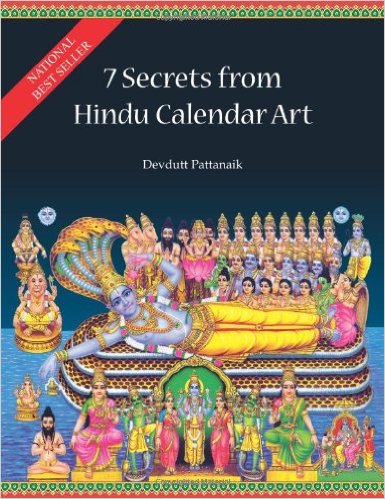
Overview: Pattanaik. Seven Secrets from Hindu Calendar Art.


As of July 2018, these videos were no longer at YouTube, but hopefully they will return.

Title: Seven Secrets from Hindu Calendar Art
Author: Devdutt Pattanaik
Year: 2009

Free Online: You can watch the videos for free at YouTube. I would strongly suggest getting the Kindle version also to help you with notetaking.

Kindle: You can buy your own Kindle copy from Amazon for $2.99 (checked price November 2017).

Length: three weeks. I've divided the videos into six parts: A - B (one week), then C - D (second week), and E - F (third week).

Part A - Ganesha
Part B - Narayan

Part C - Ardhanari, Shiva
Part D - Shiva, Devi

Part E - Vishnu
Part F - Brahma


Overview: B. Sharma. Ramayana.


Title: Ramayana.
Author: Bulbul Sharma
Year: 2007

Comments: This is a retelling of the story of the Ramayana for young audiences (the "Puffin" is a Penguin imprint for younger readers).

Bizzell Reserves: Go to the Bizzell Reserve Desk to check out a Kindle with this book; you can learn about the Bizzell Kindles here. The Kindle also has an audiobook version you can listen to!

Kindle: You can buy your own Kindle copy from Amazon for $12 (checked price November 2017); more about Kindles.

Audiobook: You can buy your own Audible copy from Amazon for $16.95 (checked price November 2017).

Length: two weeks. I've divided the reading into four parts: Part A - Part B (one week of reading/listening), and then Part C - Part D (another week of reading/listening).

WEEK 1:
Reading A
The Birth of Rama
Tataka
Mareecha and Subahu
Sita
Ahalya
The Swayamvara
Dasharatha's Plan
The Plot
The Curse
The Banishment
In the Forest
Dasharatha's Death
Reading B
Into the Wild
Panchavati
Soorpanakha
Khara's Revenge
In Ravana's Court
Mareecha
The Golden Deer
The Abduction
The Search for Sita
Kabandha

WEEK 2:
Reading C
The Monkey Clans
Kishkinda
The Search Begins
Hanuman in Lanka
Preparing for War
Crossing the Ocean
Before the Battle
The First Battle
Reading D
Kumbhakarna
Indrajit
Ravana
Return to Ayodhya
The Second Banishment
At Valmiki's Ashram
The Ashwamedha Horse
Back at the Ashram
Rama and His Sons


Reading Guide: Sanghi. Krishna Key.


Title: The Krishna Key
Year: 2012
Author: Ashwin Sanghi

Comments: This is an exciting book in the style of Dan Brown's Da Vinci Code which interweaves the ancient legend of Krishna with a modern thriller.

Bizzell Stacks. There is also a copy available for checkout from the regular Bizzell stacks: PR 9499.4.S2595 K757 2012 (click to see if checked out or not).

Kindle: You can buy your own Kindle copy from Amazon for $4.20 cents (checked price August 2019); more about Kindles.

Audiobook: You can buy your own Audible copy from Amazon for $7.49 (checked price August 2019).

Length: three weeks. I've divided the reading into six parts: Part A - Part B (one week of reading), Part C - Part D (second week), and then Part E - Part F (third week of reading).

For your Storytelling based on this book, good option is to focus on the ancient Krishna story which is interwoven throughout the book: it's a wonderful way to think about Krishna's story in new ways!

WEEK 1:
Reading A
Chapters 1-6
Reading B
Chapters 7-25

WEEK 2:
Reading C
Chapters 26-46
Reading D
Chapters 47-66

WEEK 3:
Reading E
Chapter 67-87
Reading F
Chapters 88-108


Wednesday, August 19, 2015

Overview: Pattanaik. Seven Secrets of Vishnu.


As of July 2018, these videos were no longer at YouTube, but hopefully they will return.

Title: Seven Secrets of Vishnu
Author: Devdutt Pattanaik
Year: 2011

Free Online: You can watch the videos for free at YouTube. I would strongly suggest getting the Kindle copy also to help with names and notetaking (you can read a Kindle on any device or in your browser; no Kindle device required).

Kindle: You can buy your own Kindle book from Amazon for $2.99 (checked price November 2017).

Audiobook: You can buy your own Audible book from Amazon for $12.71 (checked price November 2017).

Length: three weeks. I've divided the videos into six parts: A - B (one week), then C - D (second week), and E - F (third week).

Part A - Mohini
Part B - Matsya 

Part C - Kurma
Part D - Trivikrama 

Part E - Rama
Part F - Krishna


Wednesday, November 5, 2014

Overview. Pattanaik. Seven Secrets of the Goddess


Title: Seven Secrets of the Goddess
Author: Devdutt Pattanaik
Year: 2016

Free Online: You can watch the videos for free at YouTube. I would strongly suggest getting the Kindle copy also to help with names and notetaking; more about Kindles.

Kindle: You can buy your own Kindle book from Amazon for $2.99 (checked price November 2017).

Audiobook: You can buy your own Audible book from Amazon for $12.71 (checked price November 2017).

Length: three weeks. I've divided the videos into eight parts: A - B (one week), then C - D (second week), E - F (third week), and G - H (fourth week).

PART A: Gaia's Secret 1-2
PART B: Gaia's Secret 3-4

PART C: Kali's Secret
PART D: Gauri's Secret

PART E: Durga's Secret
PART F: Lakshmi's Secret

PART G: Saraswati's Secret
PART H: Vitthai's Secret