Showing posts with label type: free online. Show all posts

Tuesday, February 5, 2019

Overview: Dharma. Ramayana.


Title: Ramayana: India's Immortal Tale of Adventure, Love and Wisdom
Author: Krishna Dharma
Year: 2008

Comments. This is a contemporary translation of Valmiki's Ramayana, and you can find out more about the author here: Krishna Dharma.

Free Online. Although it is not in the public domain, thanks to the generosity of the author and the International Society for Krishna Consciousness, the book is available for you to read for free. Find out more at the Freebookapalooza. There are also links, section by section, below.

Bizzell Stacks. There is also a copy available for checkout from the regular Bizzell stacks: BL 1139.25 .E54 2003 (click to see if it is checked out or not).

Kindle: You can buy your own Kindle copy from Amazon for $7.99 (checked price January 2019); more about Kindles.

Length: up to four weeks. You are already familiar with the basic plot of the Ramayana from the first half of the semester, and this novelized version fills in lots of detail. I've divided the reading into eight parts, so you could use this for all the reading during the second half of the semester if you want, or you can select whatever specific part(s) are of interest to you.

WEEK 1:
Reading A 
Prologue
RKD: 1.1: King Daśaratha’s Longing
RKD: 1.2: The Birth of Rāma
RKD: 1.3: With the Sage Viśvāmitra
RKD: 1.4: The Trial of Strength
Reading B 
RKD: 1.5: Crooked Advice for Queen Kaikeyi
RKD: 1.6: The King’s Heartbreak
RKD: 1.7: Rāma Agrees to Depart
RKD: 1.8: Grief and Fury
RKD: 1.9: Sītā’s Plea
RKD: 1.10: Sad Farewells

WEEK 2:
Reading C 
RKD: 2.1: Into the Forest
RKD: 2.2: Devastation in Ayodhya
RKD: 2.3: Bharata’s Return
RKD: 2.4: ‘We Shall Bring Rāma Back’
Reading D 
RKD: 2.5: Rāma Remains Firm
RKD: 2.6: The Forest Sages
RKD: 2.7: The Rākṣasī Shurpanakha
RKD: 2.8: Rāvaṇa’s Lust is Incited
RKD: 2.9: The Kidnapping of Sītā


WEEK 3:
Reading E 
RKD: 2.10: Rāma’s Terrible Discovery
RKD: 2.11: Rāma Meets the Monkeys
RKD: 2.12: The Search Begins
RKD: 2.13: Hanumān Leaps to Lanka
RKD: 2.14: Sītā is Found
Reading F 
RKD: 3.1: The Army Sets Off
RKD: 3.2: Panic in Lanka
RKD: 3.3: Rāma Confronts the Ocean
RKD: 3.4: Rāvaṇa’s Evil Trickery
RKD: 3.5: The War Begins


WEEK 4:
Reading G 
RKD: 3.6: Garuḍa to the Rescue
RKD: 3.7: Rāvaṇa Enters the Fray
RKD: 3.8: The Colossal Demon
RKD: 3.9: Carnage Among the Rākṣasas
RKD: 3.10: Rāma and Lakṣman Laid Low
Reading H 
RKD: 3.11: Lakṣman Battles Indrajit
RKD: 3.12: Rāvaṇa Exhibits His Prowess
RKD: 3.13: The Final Battle
RKD: 3.14: Sītā’s Ordeal
RKD: 3.15: Back to Ayodhya
Epilogue


The following are appendices to the book; they are not part of any weekly reading option but you might find them useful for your research or just for your own reading pleasure!

Appendix 1: The Story of the River Ganges
Appendix 2: The History of Viśvāmitra
Appendix 3: The Birth and History of Hanumān
Appendix 4: The Benefits of Reading Rāmayana
Glossary
Author’s Note


Saturday, December 30, 2017

Overview: Dharma. Mahabharata.


Title: Mahabharata: The Greatest Spiritual Epic of All Time.
Author: Krishna Dharma
Year: 2008

Comments. You can find out more about this contemporary translation of the Mahabharata and its author here: Krishna Dharma.

Free Online. Although it is not in the public domain, thanks to the generosity of the author and the International Society for Krishna Consciousness, the book is available for you to read for free. Find out more at the Freebookapalooza, or use the links, section by section, below.

Bizzell Reserve: Go to the Bizzell Reserve Desk to check out a Kindle with this book; you can learn about the Bizzell Kindles here.

Bizzell Stacks. There is also a copy available for checkout from the regular Bizzell stacks: PR 9499.3 .K665 M34 2013 (click to see if it is checked out or not).

Kindle: You can buy your own Kindle copy from Amazon for $9.99 (checked price March 2018); more about Kindles.

Length: MANY weeks. You are already familiar with the basic plot of the Mahabharata from the first half of the semester, and this novelized version fills in lots of detail. LOTS of detail. I've divided the reading into sixteen parts, so you could use this for all the reading during the second half of the semester if you want, or you can select whatever specific part(s) are of interest to you.

WEEK 1:
Reading A
MBK: 1.1: Birth of the Kuru Elders
MBK: 1.2: Pāṇḍu Cursed and Blessed
MBK: 1.3: The Pāṇḍavas Come to Hastināpura
MBK: 1.4: Duryodhana Begins His Evil Schemes
MBK: 1.5: The Martial Exhibition
Reading B
MBK: 1.6: The Kauravas’ Hatred Grows
MBK: 1.7: The Pāṇḍavas Sent Away
MBK: 1.8: Ghaṭotkaca Born and Baka Slain
MBK: 1.9: The Gandharva Aṅgaraparna
MBK: 1.10: Draupadī’s Svayaṁvara

WEEK 2:
Reading C
MBK: 1.11: The Pāṇḍavas Wed Draupadī
MBK: 1.12: Dhṛtarāṣṭra Gives Half the Kingdom
MBK: 1.13: Arjuna’s Pilgrimage
MBK: 1.14: Burning the Khāṇḍava Forest
MBK: 1.15: The Celestial Hall
MBK: 1.16: Mighty Jarāsandha
Reading D
MBK: 1.17: The Rājasūya Sacrifice
MBK: 1.18: Duryodhana’s Envy
MBK: 1.19: The Dice Game
MBK: 1.20: Draupadī Dragged to the Assembly
MBK: 1.21: The Pāṇḍavas Exiled

WEEK 3:
Reading E
MBK: 1.22: Into the Forest
MBK: 1.23: Dhṛtarāṣṭra’s Anxiety
MBK: 1.24: Yudhiṣṭhira’s Moral Instructions
MBK: 1.25: Arjuna Goes to Heaven
MBK: 1.26: To Badarīkā Ashram
Reading F
MBK: 1.27: Bhīma Meets Hanumān
MBK: 1.28: Kuvera Offended
MBK: 1.29: Arjuna Returns
MBK: 1.30: Kṛṣṇa Visits the Pāṇḍavas
MBK: 1.31: The Fight with the Gandharvas
MBK: 1.32: Sage Durvāsā

WEEK 4:
Reading G
MBK: 1.33: Jayadratha Kidnaps Draupadī
MBK: 1.34: The Lake of Death
MBK: 1.35: Into Virata
MBK: 1.36: Draupadī Again Insulted
MBK: 1.37: The Kurus Attack Virata
Reading H
MBK: 1.38: Arjuna Encounters the Kurus
MBK: 1.39: The Battle at Virata
MBK: 1.40: Out of Exile
MBK: 1.41: The Kings Choose Sides
MBK: 1.42: Dhṛtarāṣṭra’s Message

WEEK 5:
Reading I
MBK: 1.43: Anxiety for the Blind King
MBK: 1.44: Panic Among the Kauravas
MBK: 1.45: The Pāṇḍavas Consult Kṛṣṇa
MBK: 1.46: Kṛṣṇa’s Peace Mission
Reading J
MBK: 1.47: Duryodhana’s Obstinacy
MBK: 1.48: To Kurukṣetra
MBK: 2.1: The Armies Prepare
MBK: 2.2: Śikhaṇḍī’s Destiny
MBK: 2.3: Into Position

WEEK 6:
Reading K
MBK: 2.4: The Bhagavad-gītā
MBK: 2.5: The War Begins
MBK: 2.6: Yudhiṣṭhira’s Fear
MBK: 2.7: Bhīṣma Wreaks Havoc
MBK: 2.8: The Rākṣasas Show Their Power
MBK: 2.9: Bhīṣma’s Vow
Reading L
MBK: 2.10: Kṛṣṇa Protects His Devotee
MBK: 2.11: Yudhiṣṭhira Approaches Bhīṣma
MBK: 2.12: The Fall of Bhīṣma
MBK: 2.13: Droṇa in Command
MBK: 2.14: “Yudhiṣṭhira Will Be Captured”
MBK: 2.15: Abhimanyu’s Incomparable Power
MBK: 2.16: Arjuna’s Great Vow

WEEK 7:
Reading M
MBK: 2.17: Arjuna Slaughters the Kauravas
MBK: 2.18: Kṛṣṇa’s Mystic Power
MBK: 2.19: The Kauravas Rally
MBK: 2.20: The Night Battle
Reading N
MBK: 2.21: Dṛṣṭadyumna Encounters Droṇa
MBK: 2.22: The Nārāyaṇa Weapon
MBK: 2.23: Karṇa in Command
MBK: 2.24: Karṇa’s Prowess
MBK: 2.25: Arjuna Encounters Karṇa

WEEK 8:
Reading O
MBK: 2.26: Śalya Leads the Kauravas
MBK: 2.27: Bhīma Fights Duryodhana
MBK: 2.28: Massacre by Night
MBK: 2.29: Aśvatthāmā Punished
MBK: 2.30: Yudhiṣṭhira’s Sorrow
Reading P
MBK: 2.31: Bhīṣma’s Instructions
MBK: 2.32: Kṛṣṇa Returns to Dwārakā
MBK: 2.33: Yudhiṣṭhira’s Ashvamedha Sacrifice
MBK: 2.34: Vidura Instructs Dhṛtarāṣṭra
MBK: 2.35: The Pāṇḍavas Retire


The following are appendices to the book; they are not part of any weekly reading option but you might find them useful for your research or just for your own reading pleasure!

Appendix 1: Karṇa’s Birth
Appendix 2: Karṇa Cursed
Appendix 3: Bhīṣma’s Heavenly Origin
Appendix 4: Questions Posed by Dharma to Yudhiṣṭhira
Appendix 5: Brief Biographies of Main Characters
Author’s Note


Friday, December 30, 2016

Overview. Seeger. The Five Brothers.

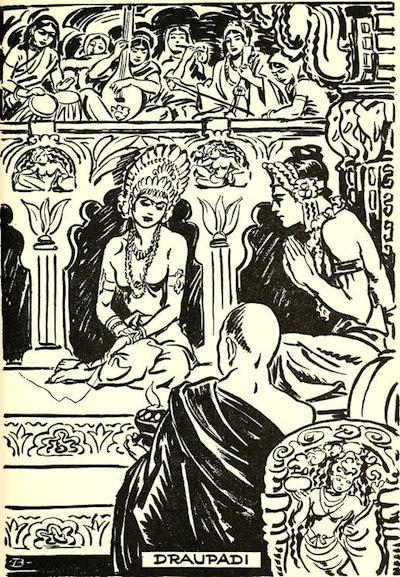
(illustration from the book)

Title: The Five Brothers: The Story of the Mahabharata
Author: Elizabeth Seeger
Year: 1948

Comments: This is a prose retelling of the Mahabharata (based on the Ganguli translation). The author provides very helpful notes in her Introduction about her goals for this book and the editorial choices she made. Note especially her unusual decisions about names and the spelling of the names. Note also that while this book was published in 1948, its copyright status was reviewed by the University of Florida Library staff who declared it "out of copyright."

Free Online: See all the links at Freebookapalooza. The links below are to the Internet Archive version of the book.

Length: four weeks. I've divided the reading into eight parts: Part A - Part B (one week of reading), Part C - Part D (another week of reading), Part E - Part F (a third week), and Part G - Part H (final week of reading).


Overview: Prasad. Bhagavad Gita.


Title: The Bhagavad Gita
Translator: Ramanand Prasad
Year: 1988

Comments: You can learn more about the translator, Ramanand Prasad, on his page at the International Gita Society.

Free Online. This translation is freely available at the Exploring Ancient World Cultures website (sometimes that site has loading problems; if that link is not working, try this one).

Length: one week. I've divided the reading into two parts: Part A - Part B.

READING A
Chapter 1: Arjuna's Dilemma
Chapter 2: Transcendental Knowledge
Chapter 3: Path of Karma Yoga
Chapter 4: Path of Renunciation with Knowledge
Chapter 5: Path of Renunciation
Chapter 6: Path of Meditation
Chapter 7: Self-Knowledge and Self-Realisation
Chapter 8: Imperishable Brahman
Chapter 9: Supreme Knowledge and the Big Mystery

READING B
Chapter 10: Manifestation of the Absolute
Chapter 11: Vision of the Cosmic Form
Chapter 12: Path of Devotion
Chapter 13: Creation and the Creator
Chapter 14: Three Gunas of Nature
Chapter 15:Supreme Spirit
Chapter 16: Divine and Demonic Qualities
Chapter 17: Threefold Faith
Chapter 18: Nirvana through Renunciation


Friday, August 19, 2016

Epified: Krishna


(Part A Playlist)

Title:  Krishna
Author:  Epified TV (India)
Year:  2015

Comments: If you like the style of the Epified Mahabharata videos, you might like their Krisha series too!

Free Online. You can watch this online for free at YouTube!

Length: one weeks. I've made two playlists, one for the Part A (see above) and Part B (see below), with links to the individual episodes also.


(Part B Playlist)

Episode List: A

Krishna Comes - An Introduction
Krishna Episode 1 - Kamsa
Krishna Episode 2 - Vasudev Meets Yamuna
Krishna Episode 3 - Durga Speaks to Kamsa
Krishna Episode 4 - Putana
Krishna Episode 5 - Maakhan Chor
Krishna Episode 6- Krishna's mouth
Krishna Episode 7 - Dreams and Music
Krishna Episode 8 - Kamsa's Terrors
Krishna Episode 9 - The Govardhan Hill
Krishna Episode 10 - Radha's love

Episode List: B

Krishna Episode 11- Krishna Humbles Brahma
Krishna Episode 12 - Krishna rides Hastin
Krishna Episode 13 - The Saviour of Dharma
Krishna Episode 14 - Akrur Invites Krishna
Krishna Episode 15 - Krishna's Farewell
Krishna Episode 16 - Krishna Arrives At Mathura
Krishna Episode 17 - Krishna Kills Kuvalayapida
Krishna Episode 18 - Krishna Kills Kamsa
Krishna Episode 19 - Freedom For Mathura
Krishna Episode 20 - Dwarka - Krishna's Kingdom


Overview: Epified Mahabharata


Title:  The Mahabharata: Karmic Revolution
Author:  Epified TV (India)
Year:  2015-2016 (new episodes are still being added)

Comments: Slowly but surely, Epified TV in India is making its way through the entire Mahabharata with these wonderful animated short episodes.

Free Online. You can watch this online for free at YouTube!

Length: three weeks. I've made six separate playlists which you can use for three weeks of viewing/reading: Part A - Part B (one week), Part C - Part D (second week) and Part E - Part F (third week).


Overview: Paley. Sita Sings the Blues


Author: Nina Paley
Title: Sita Sings the Blues
Year: 2008

Comments: Nina Paley's film, Sita Sings the Blues, is a full-length animated version of the Ramayana, focusing on Sita, and you can watch it for free at YouTube, thanks to the generosity of Nina Paley, who has put the film into the public domain! The film is woven together from three parts: the ancient story of Sita and Rama, commentary from three modern Indian narrators (who each have their own perspective on the story), and then the the story of Nina and her boyfriend Dave. You can find out more about Nina Paley and her work here: Nina Paley. The soundtrack consists of blues songs; you can see a complete list of the songs here.

Free Online: You can watch the film for free at YouTube.

Length: one week. The film is appx. 90 minutes long, divided into two parts, Part A and Part B. There is a detailed reading guide at the bottom of this post with film times plus notes.


Part A
0:00 Lakshmi rises from the sea with a phonograph.
0:03 The cosmos: Shiva in a ring of fire, Brahma, Lakshmi and Vishnu resting on Shesha, Surya the sun god, Chandra the moon god, the beating heart of the universe, and Bhumi the earth goddess.
0:05 San Francisco. We see Nina, her boyfriend Dave, and their cat. They are all very happy. The boyfriend gets a job in India.
0:07 The three narrators argue about the date of the Ramayana. They also argue about whether it is true or not, and about where the story took place.
0:08 King Dasharatha has three wives and four sons. Sita, daughter of Janaka, is Rama's wife. Queen Kaikeyi makes Dasharatha send Rama into exile. He dies of grief after Rama leaves.
0:11 Despite Rama's warnings about the rakshasas in the forest, Sita goes into exile with him. The phonograph plays a song while they go into the forest where they live happily while Rama slays rakshasas.
0:14 San Francisco airport: Nina kisses her boyfriend goodbye.
0:15 The narrators discuss Ravana who stole Sita. Ravana some say was a good king, but they also compare him to Mogambo the Hindi film villain. Ravana was so devoted to Shiva that he played the veena (lute) for him with his intestines: this refers to the legend that when a string on the veena broke, Ravana used his own guts to continue playing so that he would not interrupt the song. He was the king of Sri Lanka, and there was an ancient land bridge connecting India to the island.
0:17 Surpanakha is Ravana's sister. Angry at Rama, Surpanakha tells Ravana about Sita. Maricha tells Ravana to leave Sita alone but Ravana commands Maricha to become a golden deer to distract Rama so he can grab Sita.
0:18 Sita is enchanted by the golden deer. Rama suspects a trick, but Sita begs him to pursue the deer.
0:19 Sita sings about her love for Rama, while Ravana sneaks up on their forest hut.
0:21 Ravana abducts Sita in his flying chariot.
0:22 Sita drops her jewelry as a sign; Rama seeks her in the forest.
0:23 Hanuman: The narrators discuss Vishnu's incarnation as Hanuman, and one narrator mentions Shiva's incarnation as Hanuman (the other narrators had not heard about that, and it is indeed a later tradition).
0:24 Rama and Hanuman become allies. Rama sends Hanuman to look for Sita.
0:25 San Francisco: Dave calls Nina to invite her to India.
0:26 Sita is held captive in Lanka, and she weeps for Rama. She rejects Ravana's advances.
0:27 Hanuman finds Sita in Lanka while Sita sings the blues. He sets Lanka on fire and then returns to Rama.
0:31 The narrators argue about why Sita did not escape with Hanuman. Meanwhile, Nina goes to India.
0:32 The narrators argue about whether the monkeys were monkeys or half-monkey and half-man. Rama leads his monkey army to Lanka.
0:33 Sita sings with joy while Rama battles the rakshasas and slays Ravana.
0:36 Nina arrives in India, but Dave tells her not to kiss in public. They don't kiss in bed either.
0:37 The narrators discuss how Rama was cold to Sita after rescuing her.
0:38 Sita and Rama are reunited, but he rejects her because she lived in another man's house. He sends her away. Sita despairs.
0:39 Sita asks for a funeral pyre. The narrators argue about how to interpret this part of the story.
0:40 Sita sings the blues while she undergoes a test by fire, protected by Agni the fire god.
0:43 Rama asks for Sita's forgiveness.
0:44 Nina and Dave are working in the same office in India. Nina goes to New York for a week.
0:45 The narrators discuss the flying chariot, Pushpaka, that takes Rama and Sita back to Ayodhya.
0:46 Sita sings the blues again: if you want the rainbow, you must have the rain.
0:48 INTERMISSION

Part B
0:51 Dave breaks up with Nina by email when she is in New York. Her heart breaks and she burns with grief.
0:55 Sita tells Rama she is pregnant. Meanwhile, a laundry man (a dhobi) beats his wife, accusing her of being unfaithful and comparing her to Sita.
0:56 To protect his reputation, Rama tells his brother Lakshmana to take Sita into the forest and abandon her. The narrators debate these events.
0:57 Sita, now very pregnant, sings the blues again. Lakshmana, weeping, takes her into the forest and abandons her.
1:00 Nina is living in Brooklyn, and she dreams about Dave.
1:01 Sita thinks it is karma from a past life that is bringing her grief. She would kill herself if she were not pregnant. Valmiki rescues her.
1:02 Sita sings the blues on the shore of the river.
1:04 She gives birth to twins, Lava and Kusha. From Valmiki, they learn to sing the praises of Rama.
1:06 Nina calls Dave in India and begs him to take her back.
1:07 The narrators debate Sita's devotion to Rama.
1:08 Sita sings the blues again, looking at Rama's picture.
1:11 Rama hears the boys singing in the forest. He learns they are his sons, and they learn Rama is his father. He asks that Sita once again prove her purity.
1:12 Sita calls upon Mother Earth to prove her purity and take her back into the womb.
1:13 Sita sings about her love for Rama one last time, and then leaves them behind.
1:16 In New York, Nina reads the Ramayana and works on the film.
1:17 You see Chandra the moon god, Vishnu rubbing Lakshmi's feet (!), and the final credits roll.


Many thanks to Nina Paley
for putting this film in the public domain!

More about the remarkable Nina Paley.

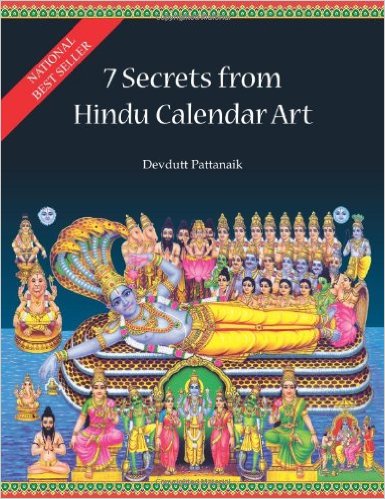
Overview: Pattanaik. Seven Secrets from Hindu Calendar Art.


As of July 2018, these videos were no longer at YouTube, but hopefully they will return.

Title: Seven Secrets from Hindu Calendar Art
Author: Devdutt Pattanaik
Year: 2009

Free Online: You can watch the videos for free at YouTube. I would strongly suggest getting the Kindle version also to help you with notetaking.

Kindle: You can buy your own Kindle copy from Amazon for $2.99 (checked price November 2017).

Length: three weeks. I've divided the videos into six parts: A - B (one week), then C - D (second week), and E - F (third week).

Part A - Ganesha
Part B - Narayan

Part C - Ardhanari, Shiva
Part D - Shiva, Devi

Part E - Vishnu
Part F - Brahma


Overview: Hodgson. Rama and the Monkeys.


Title: Rama and the Monkeys
Author: Geraldine Hodgson
Translator: W. H. Robinson
Year: 1903

Comments: This is a book written as a "reading book for boys' preparatory schools," as Geraldine Hodgson explains in the book's preface. It tells the story of the Ramayana with a young audience in mind.

Free Online: See all the links at Freebookapalooza. The links below are to the Hathi Trust presentation of the book.

Length: one week. I've divided the reading into two parts: Part A - Part B.

Reading Part A
Birth of Rama and Creation of Monkeys.
Youth and Marriage of Rama.
Rama Loses His Inheritance.
Rama Meets Sugriva.
Death of Vali.
Hanuman's Errand to Lanka.
Hanuman Reaches Lanka.

Reading Part B
Council of the Evil Beings.
Monkeys' Bridge.
Approach of the Monkeys.
Fruitless Embassy of Angada.
The Great Battle.


Reading Guide: Monro. Pandava Brothers.

(illustration from the book)

Title: Stories of Indian Gods and Heroes: The Pandava Brothers
Author: W. D. Monro
Illustrator: Evelyn Paul
Year: 1911

Comments: This book contains short versions of the Mahabharata and the Ramayana along with some other famous stories. In addition to the material included in the three units, the book also contains the story of Kuvalayaswa and the story of Dhruva.

Free Online: See all the links at Freebookapalooza. The links below are to the Internet Archive presentation of the book.

Length: one week. I've divided the reading into two parts: Part A - Part B.

READING A
II, p. 185.
The Tale of Sunda and Upasunda, p. 190.
III, p. 197.
IV, p. 204.

READING B
V, p. 215.
VII, p. 224.
VIII, p. 229.


Overview. Neogi. Sacred Tales of India


Title: Sacred Tales of India
Author: D. N. Neogi
Illustrator: P. Ghose
Year: 1916

Comments: This is a really fascinating book! The author has collected stories that are connected to Hindu rituals, so at the beginning of each story, he provides a description of the ritual. The story then helps to explain the details of the ritual, but in narrative form.

Free Online: See all the links at Freebookapalooza. The links below are to the Internet Archive presentation of the book.

Length: two weeks. I've divided the reading into four parts: Part A - Part B (one week of reading), and then Part C - Part D (another week of reading). You do not need to read this in order, and you can use it just for a half-week of reading or one or two weeks of reading; it's up to you.

Here are the four parts; as you can see some of the parts have stories that are on the long side, while other parts contain stories that are shorter, but each part is approximately the same length.

Reading Part A  
The Divine Brothers: link to story
Snatched from Death: link to story
By Itu's Favor: link to story

Reading Part B 
The Bride of Yama: link to story
The Goddess who Devoured Elephants: link to story
The Slayer of Kangsa: link to story
Chand, The Unbeliever: link to story

Reading Part C  
The Gift of the Ascetic: link to story
The Sun's Twin Sons: link to story
The Consequences of Generosity: link to story
A Brahman's Ban: link to story
The Pir's Power: link to story
The Gander-Eater: link to story

Reading Part D
The Fatal Oath: link to story
Sacrificed to Varuna: link to story
Joyabati — The Gift of Joya: link to story
Saved from the Cat: link to story
The Wife Who Used to Eat the First Morsel: link to story
The Wife Who Cooked Beef: link to story
The Banished Girls: link to story


Thursday, August 18, 2016

Overview. Herold. The Life of Buddha


Title: The Life of Buddha
Author: Andre Ferdinand Herold
Translator: Paul C. Blum
Year: 1922

Comments: This presents the story of the life of the Buddha, beginning with his birth as Prince Siddhartha.

Free Online: See all the links at Freebookapalooza. The links below are to the Sacred Texts presentation of the book, which is an English translation of a French book (you can find the French book online at Hathi Trust).
Bizzell: There is a copy available for checkout from the regular Bizzell stacks: BL 1470 .H4 1954 (click to see if it is checked out or not).

Length: four weeks. I've divided the reading into eight parts: Part A - Part B (one week of reading), Part C - Part D (another week of reading), Part E - Part F (a third week), and Part G - Part H (final week of reading). You should start at the beginning, but you do not need to read the whole thing: if you finish Part A, Part B, and Part C you will reach the moment of the Buddha's enlightenment.


WEEK 1:
Reading A:
KING SUDDHODANA AND QUEEN MAYA
MAYA'S DREAM
THE BIRTH OF SIDDHARTHA
ASITA'S PREDICTION
SIDDHARTHA AT THE TEMPLE
SIDDHARTHA'S FIRST MEDITATION
THE MARRIAGE OF SIDDHARTHA
Reading B:
SIDDHARTHA LEADS A LIFE OF PLEASURE
THE THREE ENCOUNTERS
GOPA'S DREAM
SIDDHARTHA IS EAGER TO KNOW THE GREAT TRUTHS
SIDDHARTHA LEAVES HIS FATHER'S PALACE
SIDDHARTHA THE HERMIT
GOPA AND SUDDHODANA GRIEVE

WEEK 2:
Reading C:
THE DOCTRINE OF ARATA KALAMA
SIDDHARTHA AND KING VIMBASARA
SIDDHARTHA DESERTED BY HIS FIRST DISCIPLES
SIDDHARTHA UNDER THE TREE OF KNOWLEDGE
MARA'S DEFEAT
SIDDHARTHA BECOMES THE BUDDHA
Reading D:
TRAPUSHA AND BHALLIKA
THE BUDDHA IS PREPARED TO PREACH THE DOCTRINE
THE BUDDHA LEAVES FOR BENARES
THE BUDDHA FINDS HIS FORMER DISCIPLES
THE STORY OF THE HERMIT AND THE HARE
THE STORY OF PADMAKA
THE BUDDHA AT THE BAMBOO GROVE

WEEK 3:
Reading E:
SARIPUTRA AND MAUDGALYAYANA
THE BUDDHA PACIFIES THE MALCONTENTS OF RAJAGRIHA
SUDDHODANA SENDS MESSENGERS TO HIS SON
THE STORY OF THE CRANE AND THE FISH
THE STORY OF VISVANTARA
Reading F:
THE STORY OF DHARMAPALA
GOPA'S GREAT VIRTUE
NANDA RENOUNCES ROYALTY
THE BUDDHA LEAVES KAPILAVASTU
ANATHAPINDIKA'S OFFERING
THE NEW DISCIPLES
NANDA'S PRIDE
THE DEATH OF SUDDHODANA

WEEK 4:
Reading G:
MAHAPRAJAPATI IS ADMITTED TO THE COMMUNITY
THE BUDDHA EXPOSES THE IMPOSTERS
SUPRABHA
VIRUPA
SINCA'S DECEIT
THE BUDDHA TAMES A WILD BUFFALO
DISSENSION AMONG THE MONKS
KUVALAYA THE DANCER
THE GOD ALAVAKA DEFEATED BY THE BUDDHA
Reading H:
DEVADATTA EXPELLED FROM THE COMMUNITY
AJATASATRU'S TREACHERY
THE DEATH OF DEVADATTA
PRASENAJIT AND AJATASATRU
THE BUDDHA TEACHES THE DOCTRINE
THE BUDDHA AND THE SHEPHERD
THE BUDDHA INSTRUCTS THE MONKS OF VAISALI
THE MEAL AT CUNDA'S
THE BUDDHA ENTERS NIRVANA


Overview. Gandy. Pandav Princes.


Title: The Pandav Princes
Author: Wallace Gandy
Year: 1915

Comments: This is a version of the Mahabharata that focuses on the Pandava brothers and their story. It is good for two weeks' worth of reading.

Free Online: See all the links at Freebookapalooza. The links below are to the Hathi Trust presentation of the book.

Length: two weeks. I've divided the reading into four parts: Part A - Part B (one week of reading), and then Part C - Part D (another week of reading).

Week One
Reading A

Week Two.

Overview: R. Dutt. Mahabharata.


Title: Mahabharata, Epic of the Bharatas
Author: Romesh C. Dutt
Year: 1898

Comments: This book contains selected episodes in the Mahabharata which Romesh Dutt has rendered in English rhyming couplets. Dutt also published a collection of episodes from the Ramayana rendered in verse. Both books use an an English verse style in which he tries to convey the rhythms of the Sanskrit poetry (details).

Free Online: See all the links, including a free audiobook, at Freebookapalooza.

Bizzell: There is a copy available for checkout from the regular Bizzell stacks: 891.2 V24rEd (click to see if it is checked out or not).

Length: three weeks. I've divided the reading into six parts: Part A - Part B (one week of reading), Part C - Part D (another week of reading), and Part E - Part F (three weeks of reading). You do not need to read this in order, and you can use it just for a half-week of reading or one or two or three weeks of reading; it's up to you. There is a detailed reading guide for Part A and Part B.

Reading A: Reading Guide
Book I: The Tournament
Book II: The Bride's Choice

Reading B: Reading Guide
Book III: The Imperial Sacrifice
Book IV: The Fatal Dice

Reading C:
Book V: Woman's Love
Book VI: Cattle-Lifting

Reading D:
Book VII: The Council of War
Book VIII: Fall of Bhishma

Reading E:
Book IX: Fall of Drona
Book X: Fall of Karna

Reading F:
Book XI: Funeral Rites
Book XII: Sacrifice of the Horse


Overview: R. Dutt. Ramayana.


Title: Ramayana, The Epic of Rama, Prince of India, condensed into English verse
Author: Valmiki
Translator: Romesh Dutt
Year: 1899

Comments: This is an English verse translation of selected portions of Valmiki's Ramayana.

Free Online: See all the links at Freebookapalooza.

Bizzell: There is a copy available for checkout from the regular Bizzell stacks: 891.2 V24rEd (click to see if it is checked out or not).

Length: three weeks. I've divided the reading into six parts: Part A - Part B (one week of reading), Part C - Part D (another week of reading), and Part E - Part F (three weeks of reading).  You do not need to read this in order, and you can use it just for a half-week of reading or one or two or three weeks of reading; it's up to you based on which parts you are most interested in.


READING A
Book I: The Bridal of Sita
Book II: The Banishment

READING B
Book II: The Banishment, cont.
Book III: The Death of the King

READING C
Book IV: The Meeting of the Princes
Book V: On the Banks of the Godavari

READING D
Book VI: Sita Lost
Book VII: In the Nilgiri Mountains

READING E
Book VIII: Sita Discovered
Book IX: The Council of War
Book X: The War in Ceylon

READING F
Book X: The War in Ceylon, cont.
Book XI: Rama's Return and Consecration
Book XII: Sacrifice of the Horse


Reading Guide: Wilson. Rama's Quest


(illustration from the book)

Title: The Indian Story Book: Rama's Quest
Author: Richard Wilson
Illustrator: Frank Pape
Year: 1914

Comments: This is a retelling of the Ramayana which is 100% focused on the human drama, fast-paced and exciting to read.

Free Online: See all the links at Freebookapalooza. The links below are to the Internet Archive presentation of the book.

Length: one week. I've divided the reading into two parts: Part A - Part B.

Reading Part A
Section 1: Rama and Sita
Section 2: Rama's Exile
Section 3: Bharata and Rama
Section 4: Life in the Forest
Section 5: Ravana and Sita
Section 6: The Monkeys
Section 7: Hanuman in Lanka
Section 8: Sita and Hanuman

Reading Part B
Section 9: The Battles Begin
Section 10: Kumbhakarna Awakens
Section 11: The Fight Continues
Section 12: Rama's Victory
Section 13: Sita Tested


Overview: Monro. Indian Gods and Heroes: Rama and Sita

(illustration from the book)

Title: Stories of Indian Gods and Heroes: Rama and Sita
Author: W. D. Monro
Illustrator: Evelyn Paul
Year: 1911

Comments: This book contains short versions of the Mahabharata and the Ramayana along with some other famous stories; for this week, you will read the version of the Ramayana here.

Free Online: See all the links at Freebookapalooza. The links below are to the Hathi Trust presentation of the book.

Length: one week. I've divided the reading into two parts: Part A - Part B.

Reading Part A
Section 2.
Section 3.
Section 4.
Pururavas and Urvashi.

Reading Part B
Section 5.
Section 6.


Reading Guide: Wilson. The Five Tall Sons of Pandu.


Title: The Indian Story Book: The Five Tall Sons of Pandu
Author: Richard Wilson
Illustrator: Frank Pape
Year: 1914

Comments: Wilson's very brief version of the Mahabharata (largely based on Romesh Dutt's verse translation) is remarkable for its completely human focus. This is not a story about the gods, about supernatural weapons, about cosmic drama. Instead, it is the struggle of a royal family, bitterly divided, as they wage a world war to decide who will hold the throne.

Free Online: See all the links at Freebookapalooza. The links below are to the Internet Archive presentation of the book.

Length: one week. I've divided the reading into two parts: Part A - Part B.


Reading Guide: Part A
(Reading Part B starts at Section 7 below.)

SECTION 1: The Young Princes, p. 71

Pandu is the father of five tall sons: Yudhishthira, Bhima, Arjuna, and the twins Nakula and Sahadeva. When Pandu dies, his brother Dhritarashtra, who is blind, becomes king. Dhritarashtra has one hundred sons; Duryodhana is the eldest. He hates his cousins, the sons of Pandu (the Pandavas). Drona trains the young princes in the arts of war.


When the princes have grown up and mastered the arts of war, Drona organizes a tournament. The cousins engage in mock battles, but Duryodhana and Bhima fight so fiercely that Drona puts a stop to their contest. Arjuna performs amazing feats of archery.

Then a mysterious warrior, Karna, challenges Arjuna. He matches Arjuna's feats exactly, and then he and Arjuna prepare for a duel. The herald proclaims Arjuna's lineage and then asks the stranger to do the same; he cannot. Duryodhana then crowns the warrior as king of Huga (Anga).

A charioteer then enters the tournmanet ground, and Karna bows to him as his father. Bhima is outraged that Karna is the son of a charioteer and mocks him. Duryodhana defends Karna's skills and virtues, despite his humble birth. Darkness ends the tournament, and everyone realizes that Karna is a warrior whose talents rival those of Arjuna.

SECTION 2: Draupadi's Swayamvara, p. 77.

Duryodhana is furious when Yudhishthira is named as heir apparent to the throne. Duryodhana tries to trap the Pandavas and their mother Pritha (Kunti) in a burning house but they escape, disguising themselves as hermits.

They then go to the swayamvara of Princess Draupadi, daughter of King Drupada of Panchala. Drupada has heard of Arjuna and hopes he will enter the contest; to be sure Arjuna will win, Drupada sets up an archery target he thinks only Arjuna can hit. All the suitors fail to string the bow; Karna strings the bow, but Draupadi declares she will not accept a low-born husband. A hermit, Arjuna in disguise, then strings the bow and shoots the target.


People are amazed! Draupadi declares him the winner, but the other suitors are angry and attack the hermits. Krishna raises his hand to stop the hostilities, and all bow to him.

Arjuna then takes Draupadi home and tells his mother he has won a prize. Not knowing what the prize is, Kunti declares that it must belong to Yudhishthira as the eldest, so Draupadi will be the wife of Yudhishthira, not Arjuna. [Note that this is a major change in the story that Wilson introduces: in the traditional version, Kunti tells Arjuna that he must share his prize with all the brothers, so Draupadi becomes the bride of all five Pandavas.]

SECTION 3: King Yudhishthira, p. 82

Now that the Pandavas have made an alliance with King Drupada, Duryodhana divides the kingdom: Duryodhana takes the richer part of the kingdom along the Ganges and gives the western portion on the river Yamuna to the Pandavas. They build a beautiful royal city and perform a special sacrifice to make Yudhishthira king.


Dhritarashtra attends, as does Duryodhana, along with the kings of many other kingdoms and Krishna too. When Yudhishthira honors Krishna as the guest of honor, Shishupala, King of Chedi, gets angry. Krishna uses his discus weapon (chakra) to behead Shishupala.

SECTION 4: The Gambling Match, p. 86

Now that Yudhishthira is a king in his own kingdom, Duryodhana is mad with jealousy and decides to trick Yudhishthira in a game of dice, with the help of Prince Shakuni (who is actually his maternal uncle). Shakuni cheats and Yudhishthira loses everything, gambling even his brothers and himself. Then he loses Draupadi. Dhritarashtra is appalled and vows that the Pandavas shall not be slaves; instead, they shall go into forest exile. [In the traditional version, the forest exile is the result of a second gambling match, which Yudhishthira loses as he did the first.]

When a servant summons Draupadi, she refuses to go. Then Duryodhana's brother, Prince Dushasana, drags Draupadi by the hair into the council chamber.


She begs her husbands to avenge her, but they can do nothing. Karna taunts her, as does Duryodhana. Dhritarashtra then offers to grant Draupadi a wish; she asks to go into exile with the Pandavas. The Pandavas and Draupadi go into the forest for twelve years of exile and a thirteenth year that they must spend in disguise.

SECTION 5: Exile, p. 91

While the Pandavas are in exile, Duryodhana comes to visit and mock them, but he ends up needing their help to escape the gandharvas of the forest (led by Chitrasena), and that makes Duryodhana hate the Pandavas even more. Another prince (Jayadratha) tries to abduct Draupadi, but the Pandavas rescue her. They visit wise men who tell them stories, like the tale of Savitri who conquered death and the love story of Nala and Damayanti.

They spend the year of disguise in the court of King Virata: Yudhishthira as a brahmin priest, Bhima a cook, Arjuna a dancing master, Nakula as a stableboy, and Sahadeva as a cowboy (and Draupadi as a hairdresser to the queen). Near the end of the year, Duryodhana, together with Drona and Karna, steal King Virata's cattle. Virata's son, Uttara, calls for a chariot-driver to take him into battle, and Arjuna offers to go. Uttara thinks Arjuna is only a dancing teacher, but finally agrees. Arjuna takes Uttara to where the Pandavas have concealed their weapons, disguises as corpses hanging from trees, and so they prepare themselves to fight Duryodhana and retrieve the cattle.


SECTION 6: End of Exile, p. 95

Uttara is amazed by the quality of the weapons. Arjuna reveals that they are the weapons of the Pandavas. Uttara then asks where the Pandavas are now. Arjuna then reveals the truth about their disguised identities. When Drona sees the monkey banner (Kapi Dhwaja, in honor of Hanuman), he knows it is Arjuna who pursues them. Duryodhana escapes, but they rescue the cattle and bring them back to King Virata. It is now time for the Pandavas and Draupadi to reclaim their kingdom.

* * *

READING GUIDE: PART B

SECTION 7: Preparations for War, p. 98.

Duryodhana objects to Yudhishthira being named king of his own realm, so he prepares for war. In Virata's court, the Pandavas deliberate. Krishna's brother Balarama advocates for making peace, but Satyaki, a great warrior of Krishna's clan, calls for war. Drupada argues they should seek allies while also appealing to Duryodhana for peace. Krishna goes on a peace mission to Dhritarashtra. Krishna's appeal moves Dhritarashtra, and Drona also argues for peace, but Duryodhana insists on war, and his decision is absolute.

SECTION 8: The Battle Begins, p. 102.

When the great armies first meet on the battlefield, Arjuna hesitates to attack as enemies his own uncle and cousins and also his teacher Drona. Krishna persuades him to obey Duty (Dharma), and Arjuna agrees.


The great and aged warrior Bhishma leads Duryodhana's armies and they have the advantage on the first day. On the second day, Arjuna and the Pandavas rally, and Duryodhana threatens to replace Bhishma with Karna. Bhishma tells Duryodhana that the gods are not on their side because their cause is not just, but he still fights boldly, to Arjuna's dismay. Yet Arjuna beats off all attacks, and the battle continues. On the next day, Bhima slays many of Duryodhana's brothers but he barely escapes with his life. And so the battle goes on.

SECTION 9: Bhishma and Drona Fall, p. 105.

Fighting for the Pandavas was Shikhandin, who had been born a woman but transformed into a man, a warrior destined to bring about Bhishma's death. Bhishma would not fight someone who was born a woman, and so he lowered his guard when meeting Shikhandin in battle, and at that moment the Pandavas shot him full of arrows. Bhishma does not die right away, however, and instead lies on a bed of arrows, surrounded by the princes of both sides who weep for him.


Before he dies, Bhishma urges Duryodhana to make peace, but Duryodhana refuses. Karna later visits Bhishma, and Bhishma reveals that Arjuna is his brother; the charioteer who raised him was only his foster father, and Karna was in fact the first-born child of Kunti, Arjuna's own mother. Even so, Karna is still determined to kill Arjuna.

Drona replaces Bhishma as general of the army, and he vows to capture Yudhishthira. Arjuna has sworn not to attack Drona except to save Yudhishthira, so Drona's attack on Yudhishthira fails and the Pandavas all fight bravely. Duryodhana grows angry at Drona and threatens to replace him with Karna. Drona says he will do his duty, promising that either he or Arjuna would die that day.

Drona's son Ashwathaman is a great warrior also, and one of the war elephants has the same name. Bhima kills the war elephant, and when Drona hears that "Bhima has killed Aswathaman," he despairs, thinking his son is dead. Drona asks Yudhishthira if the news is true, and Yudhishthira replies that the elephant Ashwathaman is dead, although Drona hears only that Ashwathaman is dead. Draupadi's brother (Dhrishtadyumna) then rides up and, seeing his own father dead on the battlefield, he kills Drona. Karna will command Duryodhana's army next.

SECTION 10: General Karna, p. 110.

Duryodhana is confident that, unlike Bhishma and Drona, Karna has no secret love for the Pandavas. Karna and Arjuna face each other in battle; the result is a draw.

The next day, Karna vows that either he or Arjuna will die that day, and he asks to have Shalya, the king of Madra, as his charioteer. But first he encounters Yudhishthira, and the two of them fight. The result again is a draw, and Karna awaits Arjuna.

SECTION 11: Arjuna and Karna, p. 113.


After a brief quarrel, Yudhishthira and Arjuna apologize to one another, and Arjuna rides out to face Karna. Karna manages to break Arjuna's bow, and according to the rules of war, Arjuna asks for a respite to obtain a new weapon, but Karna continues his attack. In the midst of that attack, he repairs his bow. As Arjuna launches his own attack, Karna's chariot wheel sticks in the ground, so Karna begs Arjuna for a respite. Arjuna lets Krishna decide, and Krishna says no respite will be given. Karna and Arjuna continue to fight, until finally Arjuna shoots the fatal arrow, and Karna falls down dead upon the field.

SECTION 12: The End, p. 116.

Even after Karna's death, Duryodhana vows to carry on the war. He puts Shalya in command. When Yudhishthira kills Shalya, Duryodhana flees into the forest near a lake. [In the traditional version, Duryodhana uses supernatural powers to hide inside the lake itself.]

When the Pandavas find him, Duryodhana vows to kill them all. Bhima says that he is the one who will kill Duryodhana. They fight with maces, and Bhima knocks Duryodhana to the ground unconscious.


The Pandavas then race back to their camp, having learned that Drona's son Ashwathaman has killed their own sons. When Duryodhana comes to, he sees Ashwathaman standing there. Ashwathaman explains that he has killed all the sons of the Pandavas. Duryodhana then dies.

This was the end of the war. Pritha (Kunti) revealed to the Pandavas that Karna was also her son, and that Arjuna had thus killed his own brother. The Pandavas therefore mourned over Karna and all their other losses, and Yudhishthira acknowledged Karna's strength and skill, and "so the story ends in reunion of heart if not of life [and] in pity for the conquered rather than in boastful triumph over their fall."